València Solar. Mass deployment of shared solar energy
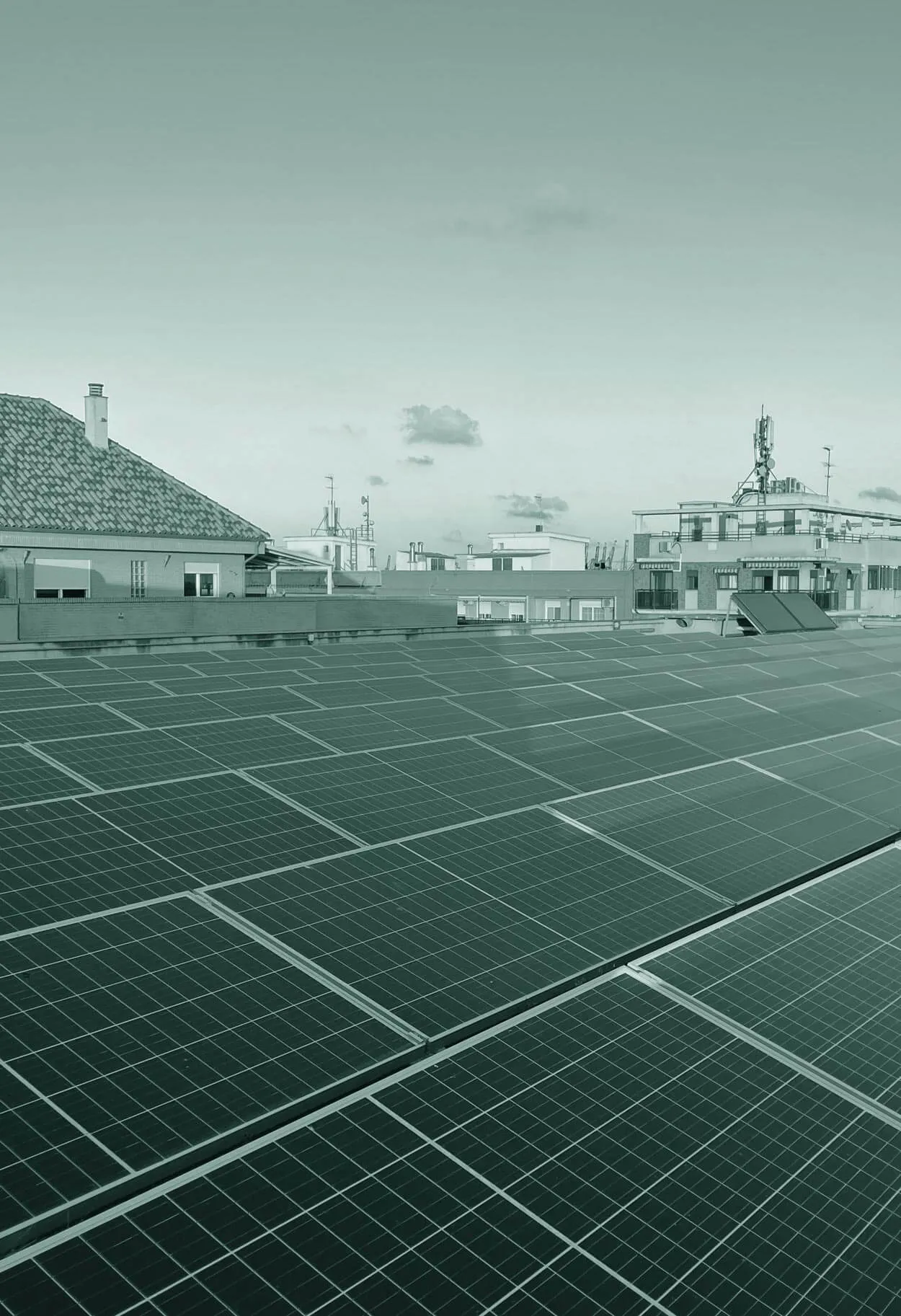
The project aims to advance a large-scale deployment of photovoltaic solar installations that will allow the city to reduce its energy consumption, greenhouse gas emissions, electricity bills, and dependence on external energy resources. Furthermore, this massive solar energy rollout is carried out in accordance with social and just transition criteria, prioritising the participation of vulnerable individuals, so that the benefits of renewable installations have a direct impact on reducing energy poverty in the city and defending the right to energy for all citizens. This just energy transition is even more relevant after the floods suffered by the DANA in 2024, which left entire populations without access to electricity, and which have severely impacted the economy of families and small businesses, which will have to be taken into account in the application of future just energy transition measures to be implemented in the future.
Why is it an emblematic project?
The city’s emission inventories show that buildings account for around 40% of the city’s energy consumption and 30% of its CO₂ emissions. Furthermore, the energy sector is moving towards electrification (of both mobility and buildings) to definitively eliminate fossil fuel use.
Moreover, the social aspect of proximity-based and collective self-consumption is a key element in this project, which aims to bring energy closer to citizens and provide the information, support, and tools necessary for València’s residents to take an active role and place themselves at the center of the system.
The project deploys solar self-consumption across all neighborhoods and districts of the city, offering enormous transformative potential. Additionally, the project not only focuses on the energy aspect, but its emphasis on citizen empowerment, the fight against energy poverty, and collaboration between neighbors, small businesses, and public administration represents a cultural and social organizational shift with a multiplying transformative capacity.
Areas and other stakeholders involved
- City Council, Climate Improvement and València Climate and Energy
- City Council, Technical Central Services
- City Council, Heritage, Municipal Sports Foundation, and other public facility managers
- City Council, Social Welfare
- City Council, Internal Audit
- Valencian Regional Government, Department of Education
- Valencian Regional Government, IVACE+I
- Engineering firms and installation companies, AVAESEN and ASELEC
- Energy Communities established in the city
- Federation of Neighborhood Associations
- Chamber of Commerce
- European Investment Bank and Cities Mission Capital Hub
Budget
- Requiem in Power: €3.3 million
- Energy Offices: €600,000 annually
- Local Energy Communities: >€290,000
- Mass Municipal Self-Consumption: €12 million
Impact KPI'S
- Installed capacity by 2025: 14.5 MWp
- Operational Energy Offices: 4
- People advised on renewables at Energy Offices: 400 per year
- Energy saved: 21,750 MWh per year
- Emissions saved: 3,262 tCO₂ per year
Lessons learned and recommendations
- The lack of regulatory clarity and the innovation of new models create significant uncertainty when promoting collective self-consumption or large-scale energy communities.
- There is still a considerable lack of public awareness, and demand is highly dependent on public subsidies and fluctuations in electricity prices.
- Showcasing successful cases, organising visits to installations, and facilitating meetings between property owners are high-impact actions. The presence of physical municipal offices where citizens can resolve their doubts and receive technical and impartial advice is crucial.
- It is necessary to establish smooth collaboration with the private sector to overcome existing distrust. Specifically, property managers are key allies.
- Decision-making in homeowners’ communities remains the main barrier to implementing installations in private buildings.
- The lack of human resources, as well as the complexity of bureaucratic procedures, are the primary barriers to large-scale deployment in public buildings.
- Vulnerable groups, such as households affected by the 2024 DANA, need to be taken into account in energy projects.
Timeline
2019 Energy Office of Aiora
2021 Local Energy Community (CEL) Castellar-L’Oliveral
2021 Energy Communities (CER) Aiora and Algirós
2022 COENSOMA
2022 Local Energy Community (CEL) Malilla
2022 Local Energy Community (CEL) Ciutat Vella
2023 Energy Office of Torrefiel
2023 Energy Office of Parque del Oeste
2023 Local Energy Community (CEL) Russafa
2024 Installations at municipal cemeteries
2024 Local Energy Community (CEL) Saïdia
2026 Mass Municipal Self-Consumption
Contracts, tender documents, by-laws
- Pliego Oficinas de la Energía: https://contrataciondelestado.es/wps/portal/!ut/p/b0/04_Sj9CPykssy0xPLMnMz0vMAfIjU1JTC3Iy87KtUlJLEnNyUuNzMpMzSxKTgQr0w_
- Model Statutes for Local Energy Communities
- Tender Documents for Roof Assignments
- Tender Documents for the RIP (Public Roof Installations)
- OTC Project (Community Transformation Offices)
- Self-consumption Management Tender Document
- IBI Discount By-law: https://sede.valencia.es/sede/descarga/doc/document_1_20230005241487
- ICIO Discount By-law: https://sede.valencia.es/sede/descarga/doc/document_1_20220003970560
Links with more information
Hamburg (DEU)
“As Green Capital 2011, Hamburg has its sights firmly set on environmental and climate protection for many years. We want to be climate-neutral by 2045 and to achieve this we are converting our district heating supply, relying on renewable energies, and investing in a hydrogen network. We have created biotope corridors to safe biodiversity. We subsidy green roofs, timber construction and set requirements for solar cells on roofs. At the same time, we are adapting our city to the consequences of climate change and preparing for heavy rainfall, heat, and drought. We are committed to sustainable mobility by expanding cycle paths and promoting electromobility. Our ambitious goals affect all areas of life, and we are convinced that only together can we achieve this great challenge.”
Senator for Environment, Climate, Energy and Agriculture of the Free and Hanseatic City of Hamburg, Mr. Jens Kerstan
Festival Futur 2
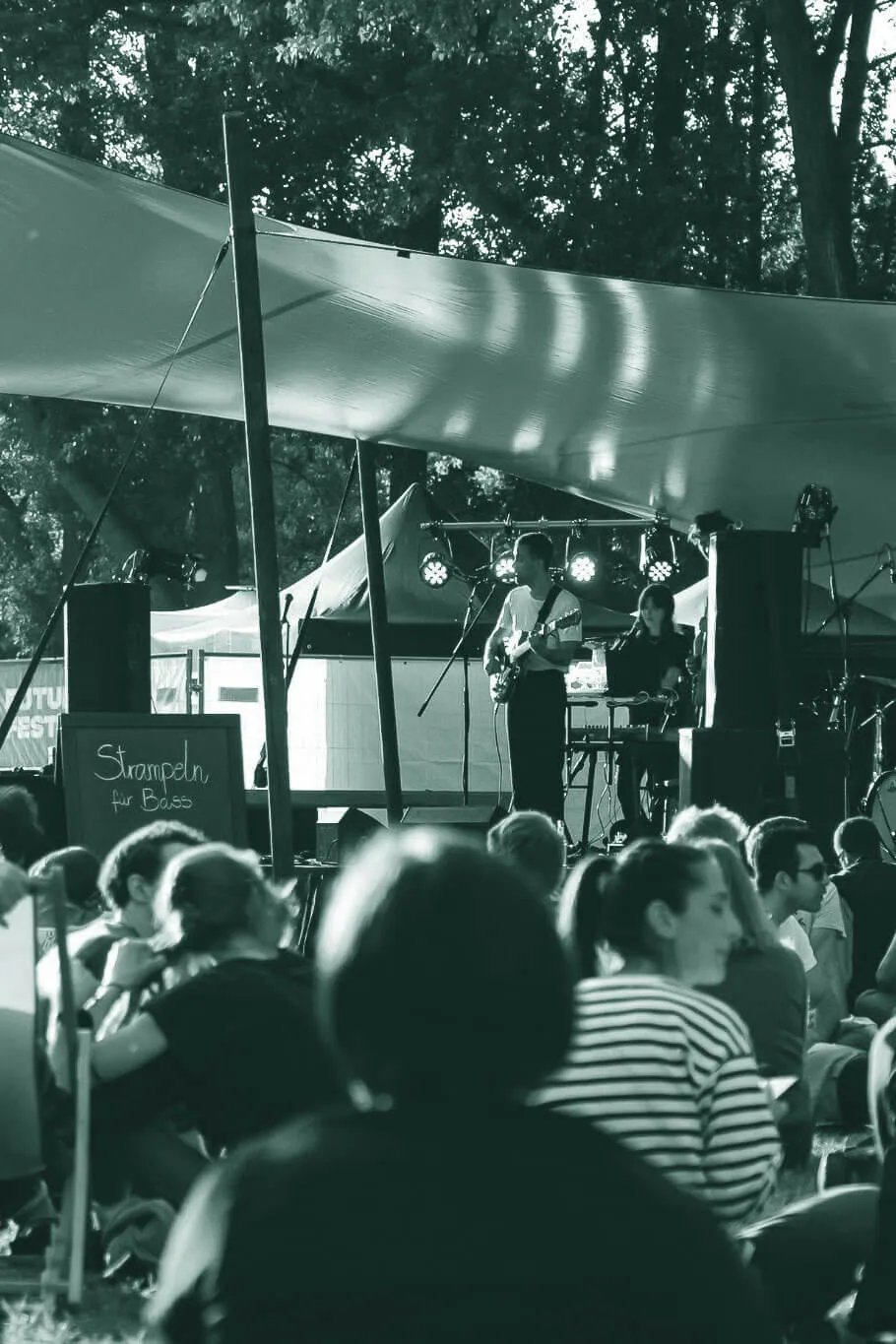
The Futur 2 Festival, an energy self-sufficient, entry free music festival, has been taking place in Hamburg since 2018. Up to 5,000 visitors have attended the last editions, demonstrating that sustainability and fun can go hand in hand. The festival is energy self-sufficient and entirely independent of fossil fuels. This is made possible by large solar cubes distributed across the site, which generate most of the electricity from renewable sources, and by the audience's muscle power. Attendees generate electricity for one of the stages by pedalling bicycles with generators in the rear wheel, allowing them to experience the value of electricity firsthand. Additionally, the festival obtains its electricity from green hydrogen, which is a residual product of wind energy, making it completely free of fossil fuels without needing to connect to the grid.
The rest of the festival is also organised sustainably, including waste avoidance, vegetarian/vegan catering, and reusable crockery. The festival promotes sustainable travel and logistics. It features a gender-equitable lineup of live acts and DJs, as well as a supporting programme with workshops, talks and exhibitors focused on sustainability and climate protection.
Lessons learned and recommendations
Sustainable events are achievable, and every event organiser can and should contribute. It's not always about doing everything perfectly, but about taking the first step. No one has to achieve 100% sustainability right from the start. The important thing is to take action. It's okay to acknowledge what you can't yet accomplish. As organisers, we have a significant impact on societal change. By leading the way, we can inspire our visitors, change their attitudes, and motivate them to take action in their daily lives. Together, we can reach a large number of people. So, let’s take a stand, act as sustainably as possible, and talk about it!
Budget
The budget is around €145,000 and is made up of funding from the Hamburg environmental authority, sponsorship money, catering income and the company's own funds.
Links with more information
An energy community is being launched on a former landfill site of 98,000m2, which includes its environmental redevelopment, a forest of 88,000m2, and a photovoltaic park for sustainable energy production (€4.3 million in funding allocated). The energy produced will be shared with other users.
Ambitious energy poverty programme in collaboration with 14 volunteers.
The overall goal is to make heat generation in the Municipality of Elsinore fossil-free no later than 2035. Elsinore is working to facilitate the creation of local district heating plants and small “heating associations” to make the transition to fossil-free heat generation more efficient.
Vilawatt was born as an UIA project (2017-20) and is now our local renewable energy transition strategy. Promotes a shift towards a decarbonised, renewable, local, & more efficient energy model, with strong citizen participation. Goals: combating climate change and a more liveable city.
Energy Rehabilitation Office: Mollet del Vallès City Council has launched an office aimed at providing information, guidance, and advice to citizens regarding the processing of aid for the energy rehabilitation of buildings and homes. It also provides information on current municipal tax incentives.
Green energy villages: Nyborg leads two citizen projects aimed at phasing out oil and gas in smaller villages. Coheat: An EU LIFE project promoting the establishment of a collective ground heating solution in three villages. 3 Solar Villages aiming to establish a citizen-driven solar power plant.
Sant Ildefons’ extensive rehabilitation plan, programme for the ground floor + 5 buildings in the Sant Ildefons neighborhood in which public leadership plays a predominant role. Minimum of 45% energy consumption savings in each rehabilitated home.
Liepāja implemented the largest ESCO model programme in the Baltics, replacing over 13,000 old lamps with energy-efficient LEDs in 27 educational buildings.
We have created 2 energy communities in 2 different areas of the country. Our municipality financed all the costs of both the systems, design and management. With this, we are trying to fight energy poverty by helping families in vulnerability.
TIPS4PED project aims to develop a platform based on DigitalTwin, to support municipalities in the implementation of positive energy districts, helping them in decision making and providing a range of evidence-based results.
Guimarães Gymnastics Academy is a near carbon-zero, self-sustainable public building hosting over 400 athletes. It uses passive solutions, eco-design, renewable energy (solar, geothermal), water reuse, and sustainable materials like cork.